
Purepath™ Safer Ingredient
Risk Level: 
Low

Avocado Oil

☡Risk Level Summary☡

The primary risk associated with avocado oil is not biological, but commercial fraud. A landmark study from UC Davis (2020) found that a significant percentage of "pure" avocado oil sold in the U.S. was either rancid or adulterated with cheaper seed oils (like soybean or safflower). When pure, it is exceptionally low-risk and highly anti-inflammatory.

In the production of "Refined" avocado oil, some industrial manufacturers use hexane—a chemical solvent derived from petroleum—to maximize oil extraction from the pulp.

The Process: Hexane is used to "wash" the pulp, and then the oil is heated to evaporate the solvent.

The Concern: While most hexane is removed, trace residues can remain. Hexane is a neurotoxin and an atmospheric pollutant.

The Solution: To avoid hexane impact, consumers are encouraged to look for "Expeller-Pressed" or "Cold-Pressed" labels, which signify that the oil was extracted using mechanical pressure rather than chemical solvents.

Biological Impact & Mechanism

From Inflammatory Seed Oils to Heart-Healthy Fats
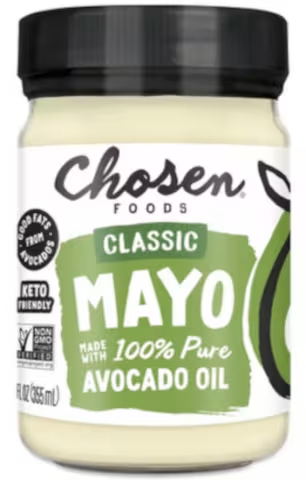
Stop Frying Your Cells: Why your "Classic" potato chip is an inflammation driver, and the avocado oil alternative that fixes the formula.
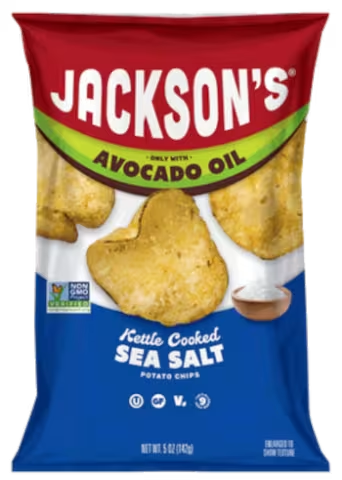
Subscribe to Avocado Oil