
Sunflower Oil
Biological Impact & Mechanism
Cellular Membrane Instability: Excess linoleic acid from sunflower oil is incorporated into your cell membranes. Because these fats are "floppy" and prone to oxidation, they can make cells more susceptible to damage from free radicals.
Adipose Accumulation: Linoleic acid has a long half-life in human fat tissue (roughly 2 years). Overconsumption leads to a "bio-accumulation" of unstable fats in the body's energy stores.
Pro-Inflammatory Precursor: Linoleic acid is the precursor to arachidonic acid, which the body uses to produce pro-inflammatory signaling molecules (eicosanoids). While necessary in small amounts, an excess keeps the body in a "ready-to-inflame" state. High linoleic acid levels are converted into arachidonic acid, fueling the production of pro-inflammatory cytokines.
Oxidative Stress: Because it is rich in polyunsaturated fats (PUFAs), it creates "free radical" damage in the body if it has been oxidized during processing or cooking.
Insulin Signaling: Emerging research suggests that an overabundance of Omega-6 in the cell membrane can impair insulin receptor sensitivity.
Mitochondrial Disruption: Oxidized metabolites of sunflower oil (like HNE) can damage mitochondrial membranes, leading to decreased cellular energy production.
Hexane Impact & Precautions
The Extraction Gap: Large-scale commercial sunflower oil is almost always hexane-extracted. The seeds are crushed, bathed in hexane, and then "de-gummed" and bleached at high temperatures.
Safety Precautions:
The "Vibrant Yellow" Warning: If the oil is perfectly clear and odorless, it has been heavily refined. Seek out "Organic" or "Expeller Pressed" versions, which retain the natural nutty flavor and avoid hexane residues.
Packaging: Only purchase sunflower oil in dark glass or opaque tins; the oil is highly light-sensitive and will go rancid quickly in clear plastic bottles.
Historical & Common Use
Sunflowers are native to North America and were used by Indigenous tribes for thousands of years. However, industrial oil production began in Russia in the 18th century (where the Orthodox Church did not ban it during Lent). Today, it is a global commodity used heavily in the production of mayonnaise, margarines, and nearly all "Kettle" style potato chips.
Consumer Sentiments
Consumer Reports of Health Effects and Symptoms
Consumers who are sensitive to PUFA-heavy oils report:
Systemic Inflammation: Joint pain and "morning stiffness."
Skin Issues: Increased incidence of "seed oil acne" or dry, inflamed patches.
Digestive: A "burning" or "heavy" sensation in the upper GI tract after eating sunflower-fried chips.
FDA & Other Regulatory Authorities
FDA (USA): Classified as GRAS. As of 2026, the FDA allows a "Qualified Health Claim" for high-oleic oils, stating they may reduce the risk of heart disease when replacing saturated fats.
EFSA (EU): Permitted for use. In 2024-2025, EFSA has been focused on monitoring mineral oil hydrocarbons (MOH) that sometimes contaminate sunflower oil during the mechanical harvest and transport process.
WHO Western Pacific: Promotes sunflower oil in developing regions as a "healthier" replacement for palm oil, though this is purely based on the saturated fat vs. unsaturated fat metric.
The PurePath™ Standard Swap
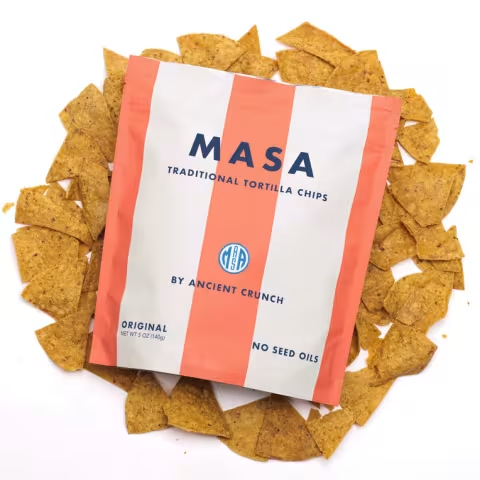
MASA Beef Tallow Tortilla Chips (Sea Salt)
Organic Corn Grass-Fed Tallow Sea Salt